Tabless architecture
Distributed current collection aims to shorten current paths and reduce resistance-related heating. Current capability and temperature rise are model-specific.
SICA ENERGY / TECHNOLOGY & ENGINEERING
Cell selection and UAV pack integration for OEM battery projects, supported by model specifications, load requirements and defined evaluation conditions.
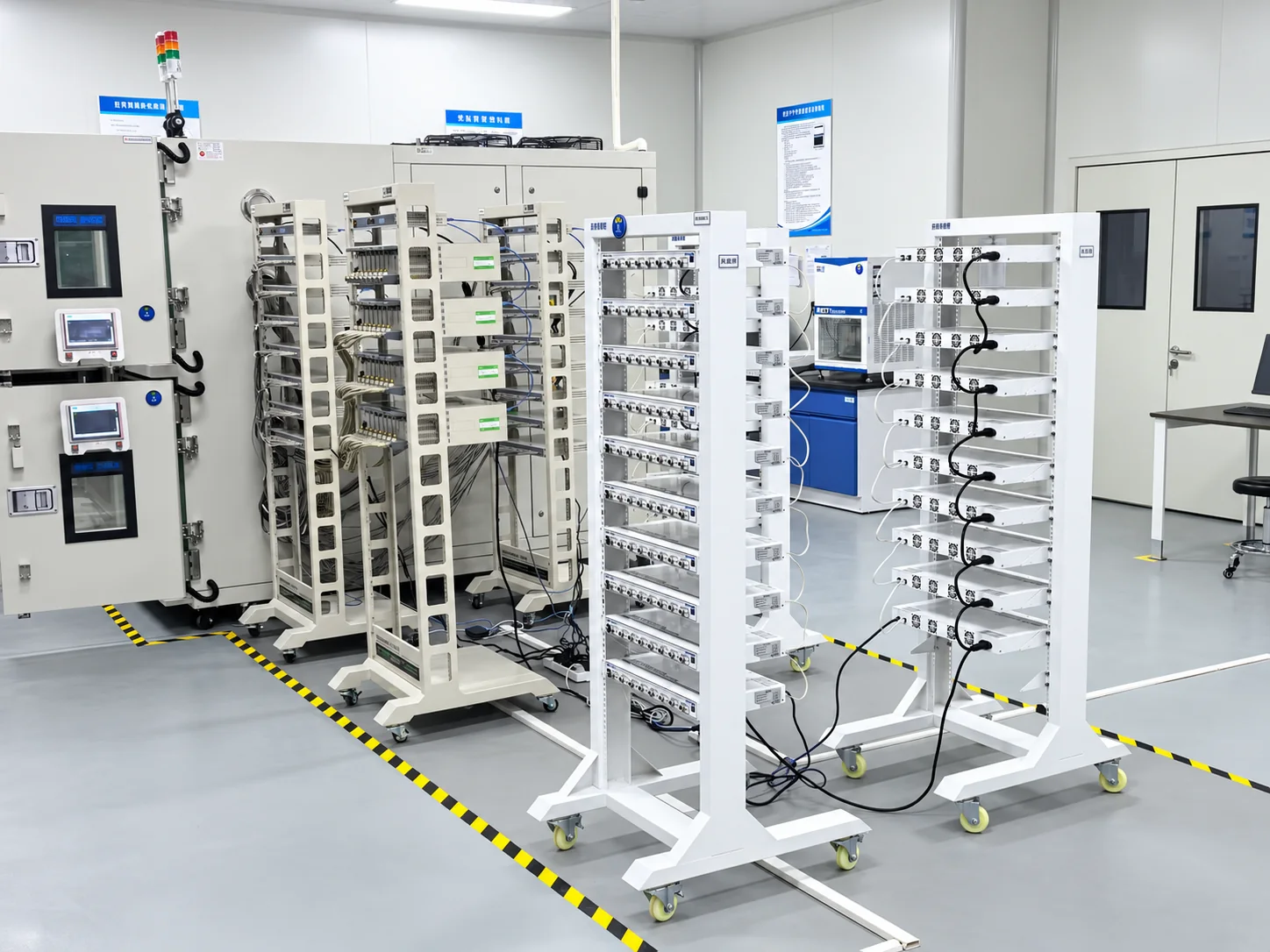
01 / BATTERY TECHNOLOGY OVERVIEW
Our cell-development foundation connects materials, electrolyte formulation, tabless architecture and manufacturing processes. Research expertise spans materials, chemistry, electrochemistry and electrical engineering.
Distributed current collection aims to shorten current paths and reduce resistance-related heating. Current capability and temperature rise are model-specific.
Silicon-carbon anode development addresses expansion control and conductivity through material composition and processing. Capacity, power and cycle behaviour are evaluated together.
Electrolyte and interface development supports high-nickel cathode and silicon-carbon anode research. Evaluation covers interface stability and capacity retention under defined conditions.
32700 tabless-cell development combines current collection, joining, binders and conductive materials. Evaluation covers resistance, heat distribution, expansion and consistency.
02 / CELL SELECTION & PACK DESIGN
Cell selection considers capacity, voltage, current, system load, series-parallel architecture, charging limits and installation space.
For a listed UAV pack, review voltage, capacity, dimensions, weight and discharge-rating definition separately. A pack C-rating does not establish its BMS configuration or a confirmed continuous-current limit.
Explore complete cell specificationsOn smaller screens, scroll within the table. Keyboard users can focus the table area and use the arrow keys.
| Model | Capacity (Ah) | Nominal voltage (V) | Continuous discharge (A) |
|---|---|---|---|
| INR18650-P2 | 2 | 3.7 | 30 |
| INR18650-M2 | 2 | 3.7 | 10 |
| INR21700-P5 | 5 | 3.7 | 50 |
| INR21700-P6 | 6 | 3.7 | 40 |
| INR32700-P8 | 8 | 3.7 | 90 |
| INR32700-P10 | 10 | 3.7 | 80 |
| INR32700-P12 | 12 | 3.7 | 60 |
| INR32700-P17 | 17 | 3.5 | 35† |
† INR32700-P17: 52.5 A with a 75°C cutoff.
Reference values from the listed product specifications. Review temperature, cooling, cutoff conditions and the test method for the selected model.
Review measurement methods, sample conditions, applied current, voltage limits and temperature conditions alongside the result for the exact model.
Review battery testing & validation03 / SYSTEM INTEGRATION
The cell or pack specification is a starting point. Protection electronics, installation details and thermal requirements are configuration-specific.
BMS & PROTECTION REQUIREMENTS
Pack protection-board inclusion, balancing, monitoring and communications are configuration-specific. Charger, load and system-level protection requirements are reviewed together.
Protection functions and interfaces must be agreed for the selected configuration.
MECHANICAL & THERMAL REVIEW
Mechanical review covers enclosure space, weight target, mounting and connector routing. Thermal review considers ambient temperature, load duration, cooling and temperature limits.
Share any enclosure-development or thermal-analysis requirements for project scope review.
04 / ENGINEERING & CUSTOMIZATION
Discuss model selection and interfaces alongside project-specific deliverables. Protection electronics, enclosure work and thermal analysis require a scope review.
Review OEM pack optionsApplication, voltage, load profile, installation space and expected quantities.
Listed models, interfaces, branding and engineering scope.
Sample requirements, test conditions, acceptance criteria and evaluation records.
Evaluation results, agreed configuration, documentation and next-stage manufacturing scope.
Sample availability, design work and validation deliverables are agreed per project.
05 / RELATED PRODUCTS
SICA ENERGY / START A PROJECT
Start with voltage, load profile, installation space and evaluation conditions.
Technical Consultation