Lithium battery sample testing should begin with an identifiable product and an agreed acceptance question. Define whether the sample is a cell or a complete pack, which conditions matter to the equipment and what evidence is needed for the procurement decision. SICA Energy's in-house cycle testing and temperature-dependent discharge evaluation support the quality of its own battery products and related OEM/ODM projects. This guide provides a buyer's review checklist, not an offer of independent third-party laboratory services. The listed evaluation areas are general planning references; they do not assert that SICA performs every possible test or that every model has completed the same programme.
Start with Sample Identity and Scope
Model, Revision and Condition
Identify the exact model, configuration, applicable specification and sample condition. Agree which batch or sample reference will connect observations to the goods under review. Record relevant handling and charge-state information so the evaluation is more than an anonymous reading with no context.

A sample should answer a defined question, such as whether a candidate merits further integration evaluation or whether an agreed specification point is met. Do not let a sample from one revision become the assumed reference for another. Public product images and family descriptions cannot replace sample identity or a controlled acceptance plan.
Cell-Level vs. Pack-Level Tests
Cell and pack evaluation have different boundaries. A cell's capacity or current entry does not include the complete assembly's structure, connections, protection and installed thermal behavior. A pack observation may depend on its configuration and controls, as well as the cells inside it.
Review the cylindrical-cell range or pouch-cell range to identify a starting model. If the procurement involves a pack, identify the whole configuration and system interfaces separately. Evidence for a component should not be expanded into a claim about equipment qualification or all products in the family.
Electrical Performance Testing
Capacity, Energy and Resistance
Capacity describes delivered charge; energy depends on voltage over the discharge as well as charge delivered. Resistance is a separate observation with a method-dependent meaning. Nominal capacity and voltage alone do not establish a measured energy result or predict the complete device runtime.

Agree the applicable method and conditions before comparing observations. Keep AC and DC resistance measurements distinct, and do not treat a resistance value as a direct measurement of capacity. The following checklist organizes questions rather than supplying a test procedure, instrument specification or acceptance limit.
Scroll horizontally to compare all columns, if needed. →
| Evaluation question | Information to agree | Interpretation boundary |
|---|---|---|
| Capacity and energy | Charge/discharge method, limits and sample condition | Cell data does not define pack runtime |
| Resistance | AC/DC method and measurement context | Different methods are not interchangeable |
| Load response | Continuous demand and timed peaks | A pulse does not establish a continuous rating |
| Repeated use | Cycle conditions and endpoint | A cycle count is not a lifetime guarantee |
| Temperature response | Relevant environment and duty | One observation is not an entire operating envelope |
Charge/Discharge and Pulse Conditions
Separate charging requirements, continuous discharge and each peak event. A pulse entry must retain its duration. Repetition and recovery require their own confirmation; neither can be assumed from a catalogue maximum. State the required current/time behavior and the applicable voltage limits for the sample under review.
This guide does not specify a new current, rest interval or charging procedure. It does not turn a cell's temperature-cutoff entry into an ordinary continuous value. If the proposed equipment has different conditions from the available product summary, identify the difference in the validation brief rather than silently extending the rating.
Thermal, Environmental and Safety Review
Temperature and Operating Envelope
Describe the relevant temperature environment and how the sample will be used. Installed cooling and duty cycle matter alongside the ambient condition. Charging and discharging may require different review, and a listed discharge-temperature range does not establish a complete charging-temperature rule.
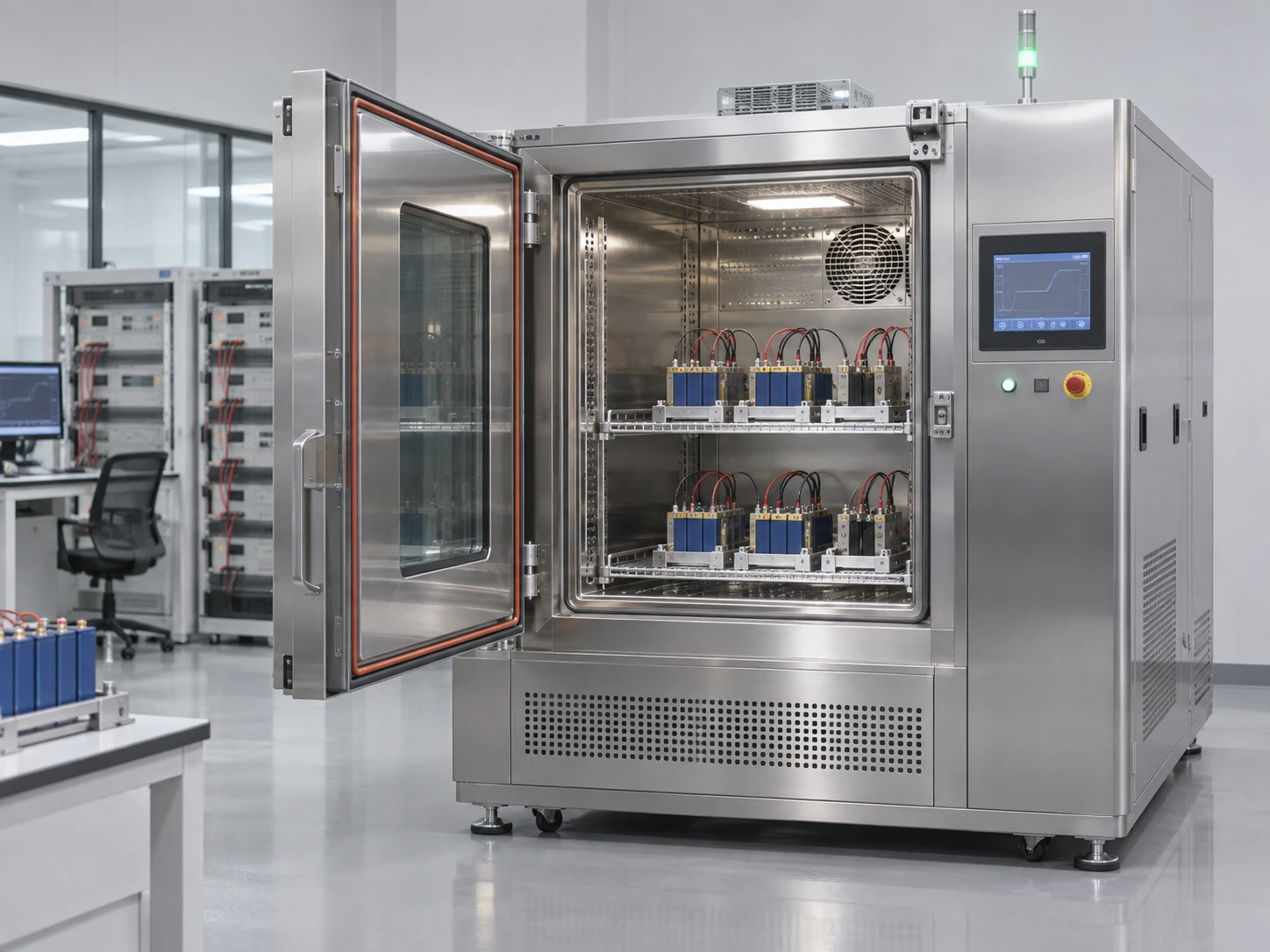
SICA's in-house testing overview explains its cycle and temperature-dependent discharge quality role. Agree which product, conditions and observations are relevant to the OEM project. The capability statement is not evidence that every model has been tested at every condition or has qualified for all intended applications.
Risk-Based Test Planning
Identify the evaluation priorities for the design, the responsible parties and the evidence needed for acceptance. Mechanical, environmental or abnormal-condition testing may need separate capability and responsibility confirmation. Listing an evaluation area here is not a promise that SICA undertakes that activity in-house.
Any demanding or abnormal-condition programme requires an appropriately qualified team and controlled arrangements. This article gives no instructions for bypassing protection or stressing an unqualified battery. Keep the quality discussion focused on the actual product, intended use and agreed scope rather than an unrestricted menu of testing services.
Read the Test Report Correctly
Method, Calibration and Raw Data
A useful result should be interpretable: identify the sample, method, relevant conditions, observations and decision supported. Where measurement traceability or calibration evidence matters to acceptance, agree the applicable records and responsibility. Do not infer a calibration status from an equipment photograph.
Ask what approved information can be reviewed for the project. Raw data, internal methods and detailed reports are not automatically public deliverables. The quality and documentation page supports a model-specific discussion; this article does not invent a report template, instrument list or laboratory accreditation.
Acceptance Criteria and Deviation Handling
Agree acceptance criteria before interpreting results as a procurement approval. If an observation differs from the requirement, record the difference and decide whether further evaluation, a revised configuration or a different candidate is needed. A favorable isolated observation should not conceal an unresolved requirement.
Keep the decision tied to the tested configuration and conditions. A report is not automatically a certification certificate, and one sample cannot establish universal batch consistency. Product changes should be reviewed against the evidence rather than assumed to preserve earlier conclusions.
Discuss SICA Product and OEM Validation
Sample Information
Discuss an OEM Validation Plan by identifying the SICA product or proposed custom configuration, equipment purpose, load profile, voltage window, charger and installation limits. Include sample quantity, anticipated order quantity, target market and project milestones.
The inquiry concerns product sourcing or OEM/ODM quality planning. It is not a booking for independent external-sample testing. Sample availability, engineering scope, available records and commercial terms are confirmed for the actual manufacturing project, not implied by a generic checklist.
Test Objective and Deliverables
State the question the evaluation must answer and the acceptance evidence your team needs. Agree who evaluates the cell, who validates the pack and who accepts the final equipment. If independently issued evidence is required, identify its model and scope separately from SICA's in-house quality review.
Discuss Product Quality Requirements to review applicable product information and available documentation. The scope of any quality observations or records is agreed for the selected product. No specific temperature programme, cycle result, accredited report or guaranteed qualification outcome is offered by this article.