A battery that retains 80% of its original capacity may still satisfy a runtime target. That percentage does not tell an OEM engineer how readily the same cell will begin a dangerous reaction under overheating. Capacity is one useful measure of health, but thermal stability and event severity need separate evidence across the service life.
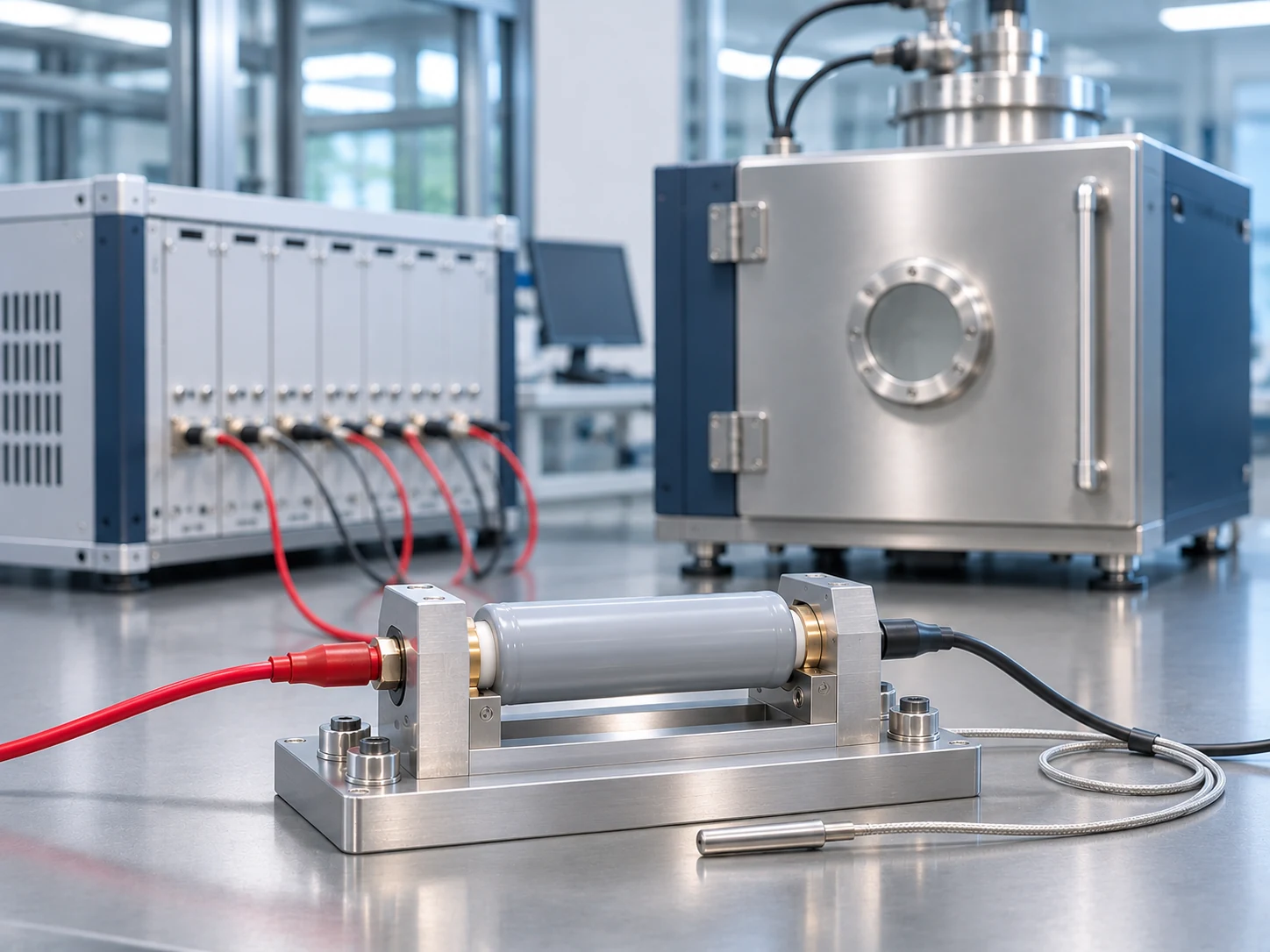
Zhu Yaning and colleagues investigated 21700 NCM811 cells at five health states in a 2024 study. Their results show an important combination: more deeply aged samples triggered thermal runaway sooner under the selected test, while their maximum temperature and some consequence metrics were lower. This article explains how to use that evidence when planning lifecycle qualification. The literature cells were not SICA Energy products, and the results do not establish SICA service life, thermal limits or certification. The supplied technical images support the explanation; they are not records of the original experiments or of SICA testing.
1. Define Health State and the Route Used to Reach It
SOH was based on measured discharge capacity
The study used commercial 5Ah NCM811/graphite 21700 cells. It defined SOH as current discharge capacity divided by a reference capacity. Samples were prepared at 100%, 90%, 80%, 70% and 60% SOH. This capacity-based definition is straightforward, but it does not directly measure every form of degradation.
The aging program used a 25°C chamber, 2C discharge to 2.5V, and 1C constant-current/constant-voltage charging to 4.2V with a 100mA termination current. Rest periods and periodic capacity measurements formed part of the procedure. These are literature test conditions for those samples, rather than recommended charging instructions for another product.
Similar capacity does not guarantee similar condition
Capacity loss can arise through different combinations of lithium-inventory loss, active-material changes, resistance growth and other degradation. Temperature, calendar storage, charge rate and discharge window can change that combination. An 80% SOH sample aged through this cycling program therefore cannot automatically represent an 80% SOH pack from a hot standby installation.
The reported thermal-test groups were prepared at 100% SOC and externally heated at 30W, keeping charge state separate from the health-state comparison. For an OEM evidence request, record both values. A statement that an aged sample was tested without specifying its charge state is incomplete, particularly when the intended system normally remains fully charged.
2. Compare Initiation with Event Severity
Aged samples triggered sooner under external heating
Scroll horizontally to compare all columns, if needed. →
| SOH in the study | Runaway trigger time | Flame duration | Upper-surface peak temperature |
|---|---|---|---|
| 100% | 1,730s | 40s | 471.5°C |
| 90% | 1,450s | 32s | 425.4°C |
| 80% | 1,173s | 28s | 415.9°C |
| 70% | 900s | 22s | 405.1°C |
| 60% | 608s | 18s | 385.6°C |
Trigger times and flame durations follow Table 4, while the peak temperatures are reported in the thermal results and Table 5. All five groups ignited in this experiment. The 60% SOH sample triggered about 64.8% sooner than the fresh reference, yet its peak surface temperature was lower.
Two safety questions must remain visible
The time and characteristic temperatures describe susceptibility under the chosen heating challenge. Peak temperature, flame duration and mass loss describe aspects of the event after initiation. A cell can become easier to trigger while exhibiting a smaller peak because aging has changed the quantity and condition of reactive material.
This distinction prevents a common sourcing error: treating a lower aged-cell peak as proof that end-of-life operation is safer. It also prevents the opposite overstatement that every consequence must increase with age. The research supports a more specific conclusion about these cells and this aging route. It does not establish the behavior of all NCM811 cells or every aged industrial pack.
3. Understand What the Temperature and Energy Metrics Represent
The authors examined self-heating onset, venting, runaway triggering and the peak surface temperature. Their reported runaway-trigger temperatures declined from 215.2°C at 100% SOH to 192.5°C at 60% SOH. At the latter state, the reported self-heating onset was 61.2°C. These temperatures describe observations in the externally heated experimental enclosure, not approved ambient or operating limits.
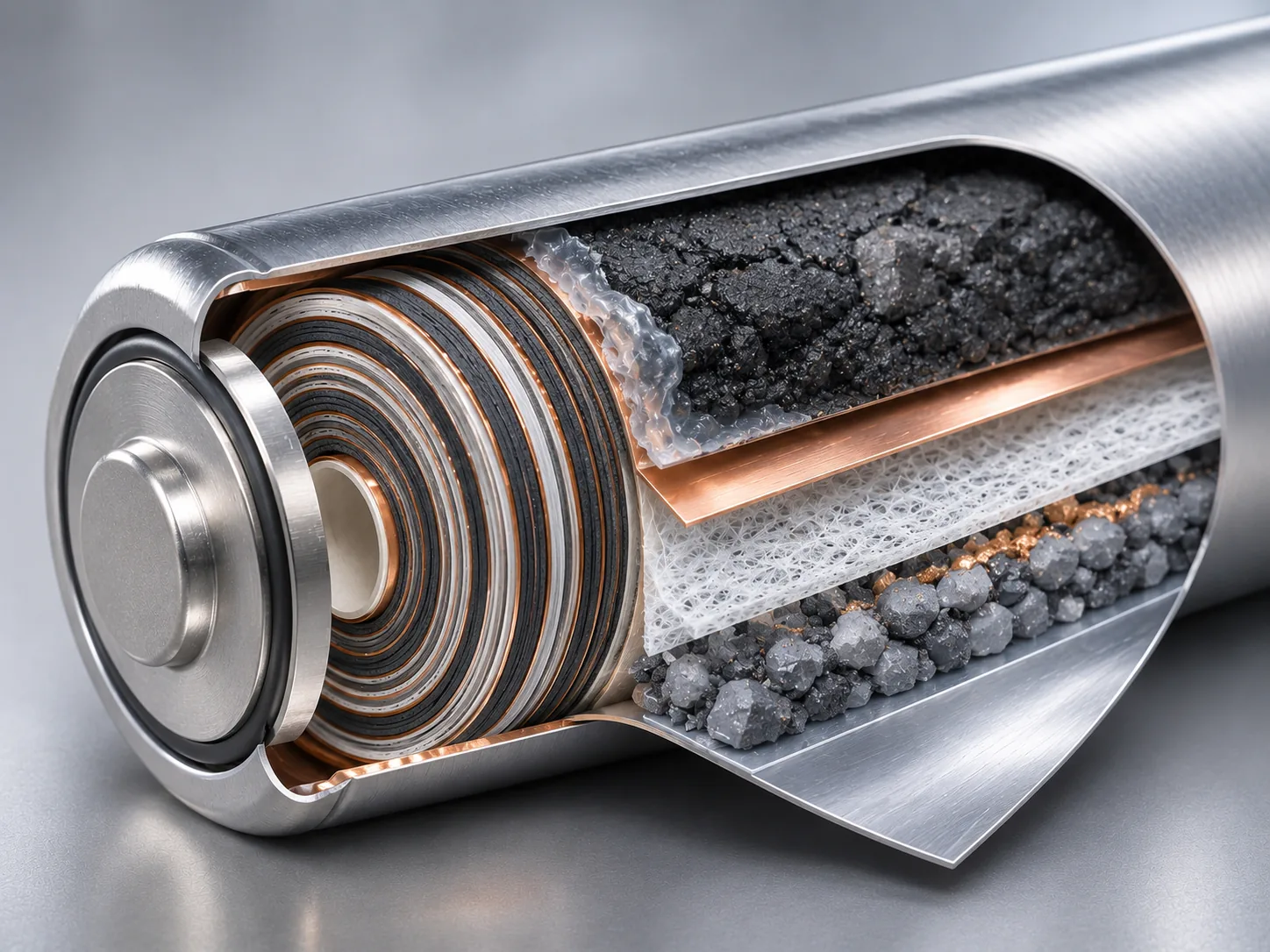
Surface measurements have location and method limits
Upper and lower sensors recorded different peak values. For the fresh sample, the upper surface reached 471.5°C while the lower location reached 381.1°C. This variation demonstrates why a report should identify sensor position rather than presenting one temperature as a complete description of the entire cell.
A pack sensor has its own thermal contact, mounting location and response time. Translating a laboratory onset value directly into firmware would ignore those differences and the system's normal load heating. Warning and shutdown thresholds require model-specific evidence and a system-level engineering assessment.
Estimated energy is not total fire calorimetry
The paper estimated an energy term from mass, heat capacity and the rise from triggering to peak temperature. It then used TNT-equivalent and damage-radius calculations. The authors excluded a surrounding-gas heating term in that estimate. Hot ejecta, gas combustion, pressure and heat transfer to neighboring cells are not fully represented by that simplified calculation.
Consequently, these estimates should not become enclosure pressure ratings, safe working distances or module propagation guarantees. The robust purchasing question is what was actually measured and which consequences the method can represent. Keep calculated quantities clearly distinguished from direct experimental observations.
4. Use Lifecycle Evidence in BMS and Maintenance Decisions
Capacity-only replacement rules leave gaps
A capacity threshold can define whether equipment still meets its energy requirement. It cannot independently establish acceptable loaded voltage, thermal behavior or abuse history. An OEM maintenance review should consider capacity together with resistance or voltage response, temperature trends and relevant fault records. The appropriate decision criteria depend on the application and selected model.
The study found that energy efficiency declined with aging while coulombic efficiency remained comparatively stable. That is another example of one apparently stable indicator concealing a change in performance. Neither efficiency measure alone is a validated safety-health score.
Review monitoring and fault responsibilities through BMS development. Specify which signals are available, how the controller estimates health and how uncertainty is handled in service decisions. The paper does not validate an online SOH algorithm, prescribe a mandatory retirement percentage or demonstrate that a BMS can predict every internal failure.
Preserve the history behind a reused battery
For second-life or repaired equipment, nominal remaining capacity is insufficient provenance. Previous temperature exposure, deep-depletion events, storage history and group mismatch can affect whether existing evidence is representative. An engineering review should establish what is known and what remains uncharacterized before defining any reuse evaluation.
These are implications for a project process, not a blanket acceptance or rejection rule for second-life batteries. The study did not qualify a complete reused pack, compare all aging mechanisms or provide a validated screening method for every returned cell.
5. Turn the Research into a Model-Specific Validation Plan
Plan fresh and aged checkpoints
Use the battery testing service page to discuss the intended cell, operating profile and evidence requirements. A useful evaluation matrix identifies the reference capacity procedure, aging route, intermediate health states and relevant end-of-service condition. Record charge state and thermal preparation for every checkpoint so that comparisons answer a defined question.
For example, SICA Energy's INR21700-P6 lists 6Ah capacity and 40A continuous discharge. It is a separate product from the 5Ah NCM811 research samples. Those catalogue entries cannot establish its aged-cell runaway timing, thermal thresholds or lifetime under an OEM's operating cycle.
Procurement should request traceable model identity, specification revision, test conditions and report scope. Engineering should define what normal-performance data is needed and whether specialist destructive safety work is appropriate. Agree acceptance criteria and responsibilities before ordering an evaluation intended to support a safety decision.
Academic reference and limits
Source: Zhu Yaning, Zhang Zhendong, Sheng Lei, Chen Long, Zhu Zehua, Fu Linxiang and Bi Qing, Thermal runaway experiment of 21700 lithium-ion battery under different health conditions, Energy Storage Science and Technology, 2024, 13(3), 971–980. DOI: 10.19799/j.cnki.2095-4239.2023.0695. The comparison above uses the paper's reported thermal-abuse results, including Tables 4 and 5.
The authors identify limitations concerning resistance, released gases and internal pressure. Those gaps matter when assessing a finished enclosure or propagation hazard. This interpretation therefore uses the study to frame lifecycle questions, not to claim that capacity retention predicts complete safety. It supplies neither SICA product test evidence nor a substitute for application-specific qualification.